What is Workers Compensation in Canada?
Workers Compensation in Canada is a government-mandated insurance system that protects both employers and workers when a workplace injury occurs. Whether you’re an injured worker trying to understand your benefits, or a business owner wondering how WCB works and what it covers, this guide will walk you through the essentials. I’ll explain how the system operates across different provinces, what workers and companies need to know about coverage, claims, and premiums, and why WCB is critical to workplace safety and financial protection in Canada. We’ll also use car insurance comparisons to make the rules easier to understand—let’s dive in.
TL;DR: Workers Compensation in Canada is a no-fault, government-mandated insurance program that protects both employees and employers after a workplace injury. It covers lost wages, medical expenses, and shields businesses from lawsuits. Employers pay premiums; workers receive benefits. Each province manages its own WCB system.
Is workers compensation required in Canada?
Workers compensation (WCB) is generally required in Canada. If you operate a business with employees, WCB coverage is mandatory under provincial legislation. Each province in Canada has its own Workers Compensation Act, meaning while the system is similar nationwide, the exact rules and requirements can vary slightly depending on where your business operates.
Key Facts About WCB Requirements:
- Mandatory Requirement: Most employers in Canada must register with their provincial WCB and pay premiums to cover workplace injuries.
- Provincial Legislation: Each province governs WCB independently, so coverage rules and reporting requirements differ across jurisdictions.
- Exceptions: In some provinces, certain low-risk industries may be exempt. In these cases, WCB coverage is optional, but still strongly recommended.
- Guidance for Employers: If you’re unsure whether your company requires coverage, contact your provincial WCB Employer Accounts Department directly as they can confirm your obligations.
How WCB Works:
Workers compensation boards, known as WCB, WSIB (Ontario), or WorkSafe (e.g., BC, Alberta), operate as government‑legislated insurance systems that protect both workers and employers.
The employer pays all WCB premiums, not the employee.
In exchange, employers are protected from lawsuits in the event of a workplace injury, while injured workers receive wage replacement and medical coverage. WCB functions as a “no‑fault” insurance system, meaning claims are accepted if they meet policy criteria. regardless of whether the injury was caused by the worker or the employer.
What does workers compensation cover?
Workers Compensation in Canada covers both injured workers and the employers they work for. It provides financial and medical support for the employee, while protecting the employer from legal liability and unexpected costs.
Coverage for Injured Workers
Workers Compensation provides three core types of benefits:
- Wage Replacement
- Injured workers receive a percentage of their net income (after taxes).
- Example: If take-home pay is $850/week and WCB pays 90%, the worker gets $765/week.
- WCB benefits typically cannot be collected with EI at the same time.
- Medical Expenses
- Covers doctor visits, prescriptions, physiotherapy, chiropractic care, massage, medical imaging (MRI, ultrasound), and assistive devices.
- All costs are paid by WCB, not the employer.
- Long-Term & Disability Support
- For permanent injuries, WCB may offer job retraining, a pension, or a wage top-up.
- Designed to reduce financial hardship if the worker can’t return to their previous job.
Protection for Employers
WCB also shields companies from legal and financial risks:
- Lawsuit Protection: Workers give up the right to sue the employer in exchange for WCB benefits.
- No-Fault Insurance: Claims are accepted if they meet policy, regardless of who was at fault.
- Premium-Based System: Employers pay premiums; WCB covers claim costs.
- Claims Management & Relief: WCB may provide cost relief (e.g., during COVID-19 shutdowns) to limit impact on the employer’s account.
What’s Not Covered?
Non-work-related issues, like personal stress or general illness, fall outside WCB and may be covered by:
- Medical Employment Insurance (EI)
- Short/Long-Term Disability plans (employer-sponsored or employee-paid)
If WCB didn’t exist, then the courts would be filled with cases of companies getting sued by workers. Workers would have to wait years to get benefits and compensation. Which is why the WCB system was created.
In addition, WCB is considered “no fault” insurance. Which means, it doesn’t matter if the injury happened because of something the worker did, or the company did. If the claim meets the WCB policy for a claim…it will be accepted.

Who pays workers compensation Canada?
In Canada, the company pays for workers compensation. It is a common myth that the employee does, but this is incorrect. The injured worker receives benefits, but does not pay the WCB premiums.
Is it mandatory to pay workers compensation?
In Canada, WCB is mandatory if you operate a business with employees. There are some provinces where depending on the industry you work in, WCB is not mandatory. In these cases, you can choose whether or not to have WCB coverage.
It’s highly encouraged that if you’re not sure whether you need coverage as a company owner, to call WCB directly and speak with their Employer Accounts Department. The representative will be able to guide you.
We have provided you with an easy to navigate contact list here.
To quickly summarize, WCB is important because:
- It protects all parties from being sued in the event of a workplace injury
- It allows an injured worker to get benefits and compensation quickly.
- The WCB is “no fault” insurance. As long as the situation meets WCB policy, they will protect the company and the worker from lawsuit.
How much does workers compensation pay in Canada?
In Canada, the workers compensation boards typically pay a percentage of your NET income. This means they take the total that you make, take off the taxes, and then pay you a percentage (which can vary between provinces) of the remaining income.
E.G. A worker makes $1,000 per week. After taxes their take home is $850 per week.
WCB pays 90% of the net income.
This injured worker would receive $850 X 90% = $765 per week.
Can you collect EI and WCB?
Technically, you wouldn’t be able to collect EI and WCB at the same time. The rare cases where an injured worker would get EI and then WCB is when waiting for a WCB decision.
This is where a worker is no longer employed by their company, and they are waiting for a decision from WCB regarding a possible claim. In that case, the injured worker could apply and receive Employment Insurance (EI) benefits.
However, if the WCB accepts the injured worker’s claim and issues wage replacement benefits during the same time the worker was receiving EI, the injured worker would need to repay that amount back to EI.
This is to prevent “double dipping” of benefits.
If the injured worker’s claim is denied, then they would not be required to pay back EI.
How does WCB protect businesses in Canada?
As mentioned previously, the WCB protects businesses from lawsuit and costs associated with an injury to the company’s employee.
In addition to protection from lawsuit, when an employee gets hurt the WCB will:
- Confirm that the reported symptoms meet the criteria for an acceptable WCB claim
- If time is missed from work because of the injury they will pay the worker
- All medical costs related to the accepted symptoms/injuries are paid by WCB NOT the company
This protects the company from financial strain or catastrophe as a result of a workplace injury.
If you use the example of car insurance. You pay a premium of $200 per month and in exchange, if you’re in a car accident, the insurance company covers all the costs. They will pay for your repairs, the other person’s car repairs, medical bills, rentals, etc. If you didn’t have insurance, you could be personally liable for all of these costs.
Workers compensation works in a similar way. The company pays a premium and WCB covers the cost of the workers lost wages, medical bills, etc.
How does WCB protect workers in Canada?
WCB also protects a worker from being sued if the company feels that the reason for injury was caused by the worker’s actions.
More importantly, workers compensation is supposed to protect workers from financial strain because of a workplace injury.
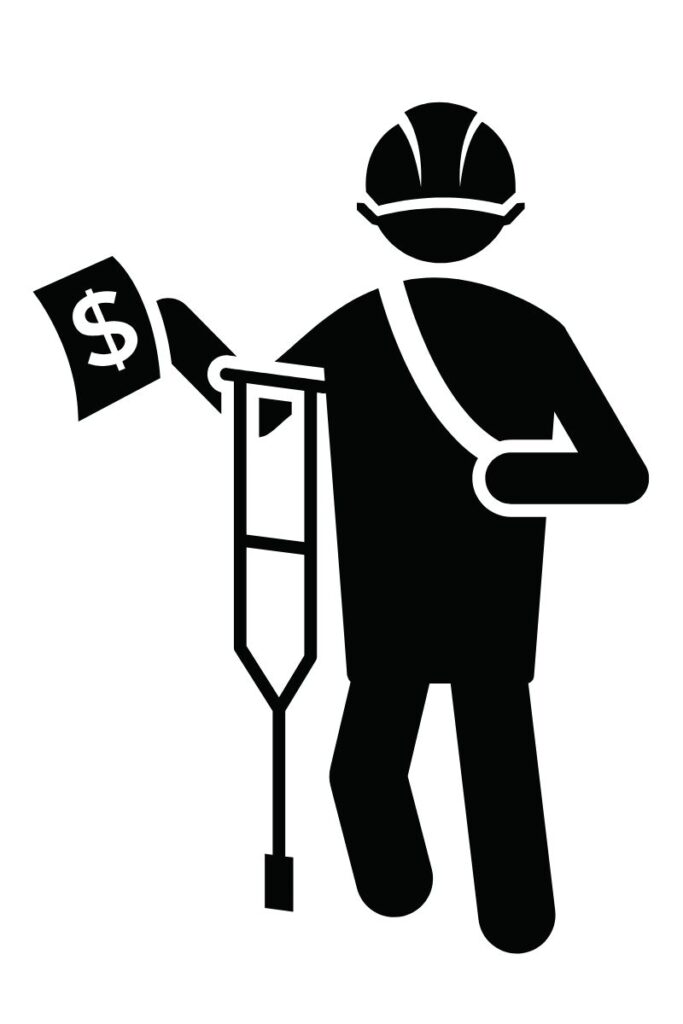
They do this by:
- Covering the cost of medical expenses, prescriptions, assistive devices in case of a workplace accident
- If the injury results in a worker having to miss time from work, the WCB can provide wage replacement to the worker. (Usually the wage replacement is a percentage of the net income)
- In the event there is permanent disability, WCB can provide retraining into a different job
- Where a workplace injury prevents a worker from doing their previous job forever, they can provide a pension or wage “top – up”
How does WCB charge premiums to a company?
Does anyone know how your car insurance company comes up with the premium you need to pay? The answer is most likely “no.”
Car insurance rates can be affected by:
- A person’s age (suggests likelihood of them getting in an accident)
- The type of car they drive (a Ferrari is more to insure than a Ford Tempo)
- How many accidents you have
- How many speeding tickets you have
With WCB it’s easier to focus on 3 things. A company’s premiums are influenced by:
- The industry you work in.
- The size of your payroll
- The total cost of WCB claims charged to your company
Just like car insurance for a Ferrari is more expensive than a Ford Tempo, the industry you work in can have a higher or lower chance of your employee getting injured. A company that works in roofing for example will have a higher rate than an accounting firm where everyone sits in a nice office.
An employee works for a company and gets paid by the company.
In WCB’s eyes: payroll = employee.
While some employees make more or less, the WCB will look at the total payroll a company is paying in a given year.
A company with a payroll of $10 million will pay higher premiums than a company with $500,000 in payroll.
Lastly, WCB will look at how much money did they spend on claims made by your employees over the past few years. (Each province does this slightly different, but the cost of a WCB claim is the main focus.)
If WCB spent more than what they consider an average on WCB claims, you will have higher premiums. If they spent less, they would discount your premiums.
This is how all insurance company’s work. The more claims you have and the more money it costs the insurance company, the higher your premiums will be the next year.
For those of you wondering WCB premiums are an expense that can be written off by the company at tax time.
Side note:
WCB premiums are an expense that can be written off by the company at tax time.
What can a company do to control WCB premiums?
Typically you can’t change the industry or adjust payroll to reduce premiums. The way most companies can control and reduce premiums is by limiting the costs of a WCB claim when they happen.
There are different ways of doing this. The most common approaches are:
- Have a solid WCB program to properly respond to injuries / illnesses reported by your employees
- Familiarize yourself with medical clinics and hospitals around your company
- Offer modified duties
- Train staff on roles and responsibilities when / if a WCB claim occurs
- Know what documents need to be completed and the time frame to submit to WCB
If you have more questions or feel like you would benefit from assistance, my company Workers Comp Simplified has a tonne of great resources to help you.
To find out more, click the “contact an expert” button and send us a message.
You can leave me a note of what type of assistance you’re looking for and I will get back to you.
Thinking of opening a WCB account in Canada?
What you don’t know could cost you thousands of dollars and hours of your time. Download our free eBook to find out what you need to know.